

Welcome to your practical guide to tarot card meanings. I’m excited to help you start your journey, not with some mystical fortune-telling gadget, but with a powerful tool for self-reflection. We’re going to demystify this deck together, so you can learn to speak the language of the cards, one step at a time.
Your Journey Into Tarot Starts Here
When you first hold a tarot deck, it’s easy to feel overwhelmed. All those strange images and symbols can seem like an ancient, complex system meant only for a gifted few. But I’m here to tell you that’s not the case at all.
Think of the 78 cards as a picture book of the human experience. Each card is a chapter, a character, or a pivotal moment in the story of life—a story we all share. Learning tarot is simply learning to read this visual language to better understand yourself and the world around you. This guide is designed to make that process feel easy, accessible, and genuinely rewarding.
A Tool for Reflection, Not Just Prediction
It’s true that most people associate tarot with predicting the future, but its real power lies in the present. The cards are like a mirror, reflecting your inner world and showing you patterns, fears, and strengths you might not even be aware of.
The cards’ journey from a simple parlor game to a tool for insight is fascinating. They were created in 15th-century Italy just for playing games, and it wasn’t until the late 18th century that people started using them for divination. This history shows how tools can evolve to meet our deeper needs. You can dive deeper into this timeline over at Tarot Heritage.
This guide fully embraces tarot’s modern role as a method for personal growth. It’s about:
- Self-Discovery: Getting to the heart of what you really think and feel.
- Problem-Solving: Seeing your challenges from a completely new angle.
- Empowerment: Making better, more conscious decisions because you have a clearer picture of what’s going on.
Before we dive into individual card meanings, it’s helpful to see the big picture. Here’s a quick breakdown of how a standard tarot deck is structured.
Quick Guide to the 78-Card Tarot Deck
| Component | Number of Cards | Primary Focus |
|---|---|---|
| The Major Arcana | 22 | Major life events, soul lessons, and overarching spiritual themes. |
| The Minor Arcana | 56 | The day-to-day challenges, joys, and situations we all face. |
| ↳ The Suit of Wands | 14 | Passion, creativity, ambition, and the element of Fire. |
| ↳ The Suit of Cups | 14 | Emotions, relationships, intuition, and the element of Water. |
| ↳ The Suit of Swords | 14 | Thoughts, challenges, intellect, and the element of Air. |
| ↳ The Suit of Pentacles | 14 | The material world, finances, work, and the element of Earth. |
Understanding this basic framework is the first step. You’ll soon see how these different parts work together to tell a rich and nuanced story. Our goal here isn’t rote memorization; it’s to build your confidence layer by layer, until the cards feel less like a mystery and more like a wise old friend.
Understanding The Architecture Of The Deck
One of the biggest misconceptions about learning tarot is that you need to memorize all 78 cards right away. Honestly, that’s the fastest way to get overwhelmed. The real secret is to first get a feel for the deck’s basic structure.
Think of a tarot deck as a book telling the story of the human journey. It’s split into two main sections: the Major Arcana and the Minor Arcana. Understanding what each section does is the foundation for everything else. The Majors are the big, life-altering plot twists, while the Minors are the day-to-day scenes that move the story forward.
This diagram gives you a clear bird’s-eye view of how the deck is organized.
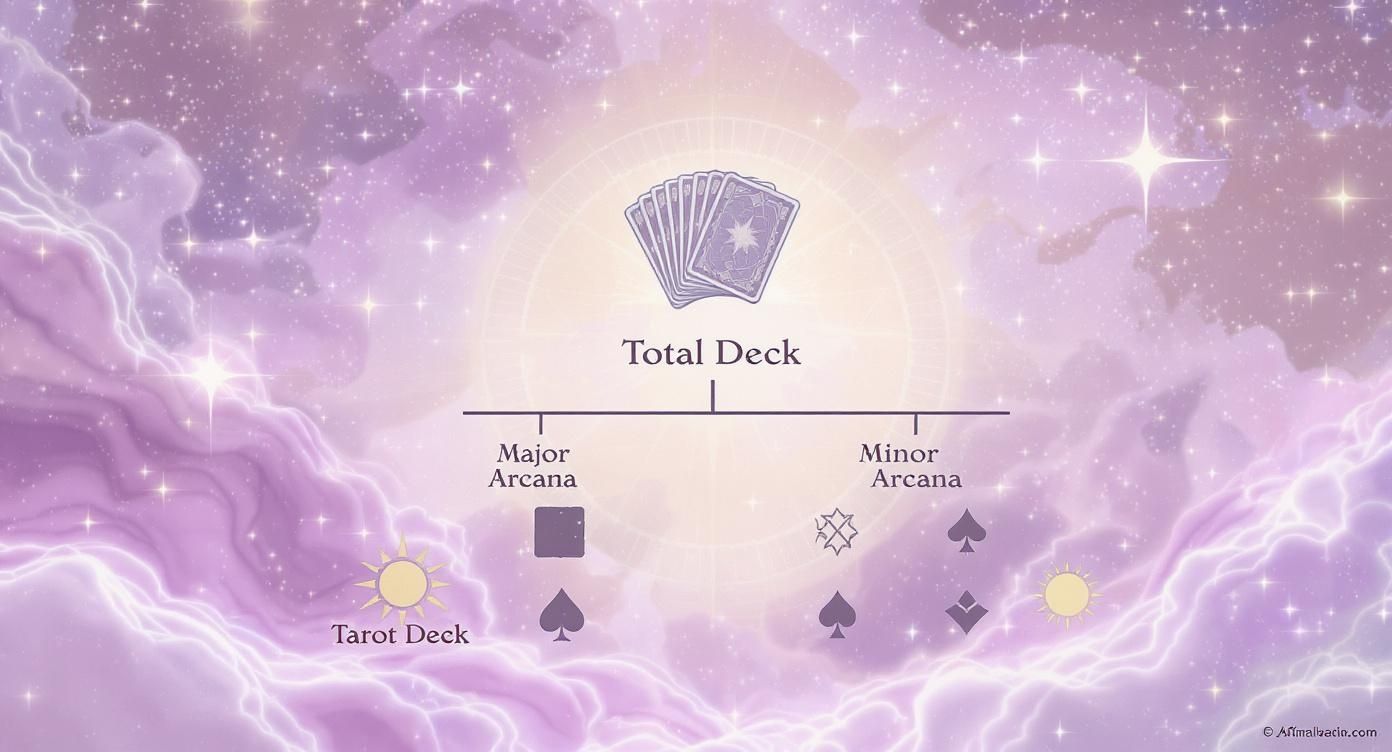
As you can see, the whole system is built on how these major life themes and minor daily experiences interact. Together, they paint a complete picture of any situation you might ask about.
The Major Arcana: Life’s Headline Moments
The 22 cards of the Major Arcana are the heavy hitters of the deck. They represent the soul-level lessons, major life events, and universal archetypes that shape our lives. These are the blockbuster moments, the turning points you’ll remember forever.
When a Major Arcana card shows up in a reading, it’s like a cosmic wake-up call. Pay attention. It’s pointing to something significant—a profound shift in perspective, a spiritual awakening, or a major decision that will define a chapter of your life. From The Fool’s innocent first step to The World’s triumphant completion, these cards map out our deepest journey of growth.
The Minor Arcana: Details Of Daily Life
The other 56 cards are the Minor Arcana. If the Majors are the headlines, the Minors are the nitty-gritty details that fill in the story. They reflect the everyday situations, thoughts, feelings, and actions that make up our reality. This tarot card meanings guide will become your best friend for navigating these specific energies.
The Minor Arcana is broken down even further into four suits, with each one connected to a core element and a specific area of your life. This is where tarot readings get incredibly practical and specific.
Understanding the four suits is like learning the basic vocabulary of tarot. Each one provides a unique lens through which you can view a situation, adding color and context to the story the cards are telling.
Here are the four suits you’ll come to know well:
- Wands (Fire): All about passion, creative energy, ambition, and the drive to make things happen. This is your spark.
- Cups (Water): This suit dives into emotions, relationships, intuition, and matters of the heart. It’s the realm of feelings.
- Swords (Air): Swords represent your thoughts, intellect, beliefs, and communication. This is the landscape of the mind.
- Pentacles (Earth): Tied to the tangible, material world—your finances, career, home, and physical well-being.
Once you get a handle on how the Major and Minor Arcana work together, and how the four suits color different aspects of life, you have the blueprint. This is the framework that will allow you to read any tarot spread with confidence.
The Major Arcana: A Journey Through Life’s Archetypes
If the Minor Arcana are the daily chatter of life, the 22 Major Arcana cards are the big, soul-shaking speeches. These cards tap into the universal archetypes and major life lessons that shape who we are. When one of these shows up in a reading, it’s a sign that you’re dealing with themes and energies much bigger than day-to-day worries.
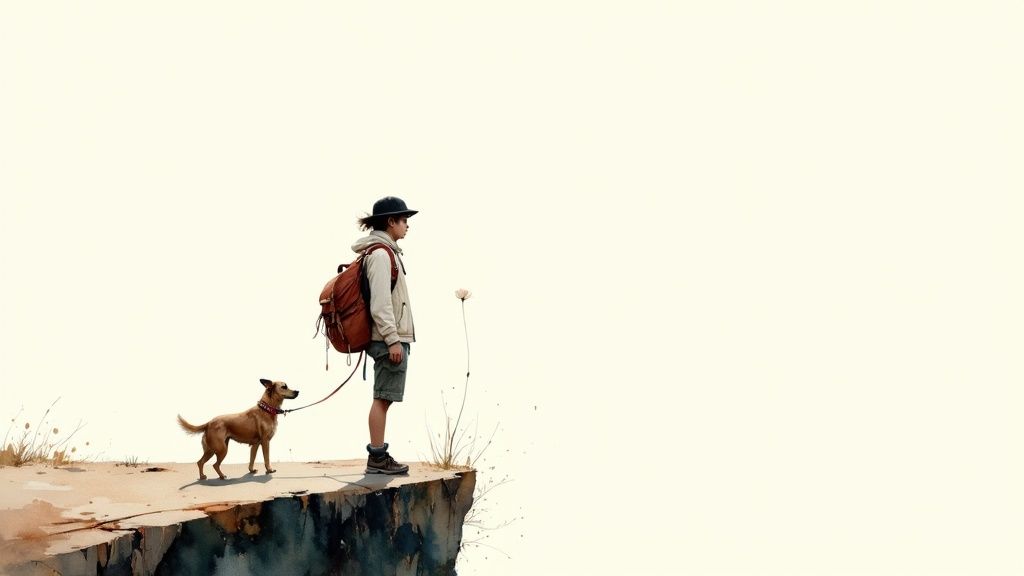
Think of these cards as the major landmarks on your personal map—the towering mountain peaks, the shadowy forests, and the sun-drenched valleys you have to cross. They flag rites of passage, spiritual awakenings, and moments of deep, lasting change. This part of our guide will frame these powerful cards as a single, unfolding story of growth.
The Fool’s Journey: An Allegory for Life
By far, the best way to get a feel for the Major Arcana is to see them through the lens of The Fool’s Journey. This is an allegorical story that follows an archetypal character, The Fool, as he sets out on a path of discovery. He starts out with pure, innocent potential and travels through the lessons and trials presented by each of the following 21 cards.
Along the way, he meets teachers like The Magician and The High Priestess, learns to navigate social structures from The Emperor and The Hierophant, and is forced to face profound inner shifts with cards like The Hermit and Death. His journey comes full circle with The World card, where he finally reaches a state of wisdom, integration, and completion.
This framework is more than just a convenient story; it’s a mirror for our own lives. At some point, we are all The Fool, constantly stepping into new cycles of learning and becoming. Viewing the Major Arcana this way turns a collection of individual meanings into a dynamic, relatable map of spiritual evolution.
The idea of tarot as a structured system of archetypes was heavily influenced by esoteric groups. For instance, the Hermetic Order of the Golden Dawn played a huge role in organizing the framework for tarot meanings in the late 19th century. They built a comprehensive system linking the 22 Major Arcana to the 22 letters of the Hebrew alphabet, the seven classical planets, and the 12 zodiac signs—a foundation that nearly all modern tarot interpretations still build on today. You can dive deeper into this fascinating history on the Victorian Hell substack.
Key Cards in the Fool’s Journey
While every one of the 22 cards is vital, getting to know a few key signposts can help illuminate the entire journey. Let’s look at how The Fool’s adventure unfolds through these essential archetypes.
- 0. The Fool: The very beginning. This is all about pure potential, innocence, and taking a blind leap of faith. The Fool has no idea what challenges are ahead, but he’s filled with an unshakeable, optimistic trust.
- I. The Magician: The spark of creation. After stepping off the cliff, The Fool meets The Magician, who shows him that he already has all the tools needed to manifest his own reality. This card is about willpower, skill, and taking conscious action.
- IX. The Hermit: The turn inward. About halfway through his journey, The Fool needs to retreat from the outside world to seek inner wisdom. The Hermit represents introspection, soul-searching, and finding guidance from within.
- XIII. Death: The great transformation. Don’t worry, this isn’t about literal death! It’s about the end of a major cycle. Here, The Fool learns to let go of what no longer serves him to make room for rebirth and new growth.
- XXI. The World: The completion. After learning all his lessons, The Fool reaches the end of his journey. The World card signifies wholeness, profound accomplishment, and the successful completion of a major life cycle.
This narrative structure helps turn abstract symbols into tangible life stages, which makes the Major Arcana so much easier to understand in a reading.
Interpreting Major Arcana Cards in a Reading
When a Major Arcana card pops up in your spread, it’s a clear signal to zoom out and look at the bigger picture. The universe is putting a spotlight on a significant theme or life lesson that needs your attention. These cards are less about what you’re doing and more about what you’re becoming.
To really get their message, think about where the card falls in The Fool’s Journey. Is it from the beginning of the path? A card like The Magician or The Empress might be pointing to new starts and foundational energies. On the other hand, a card from the end of the journey, like The Sun or Judgement, often means you’re approaching a point of breakthrough or culmination.
An Example of The Fool’s Journey in Action
Let’s say you’re thinking about a major career change but feel stuck and terrified. You pull a single card for guidance and get The Fool.
Instead of just a generic meaning like “new beginnings,” you can now place it in its story. The Fool is standing right at the edge of a cliff, about to take a leap of faith into the great unknown. This card isn’t just telling you a new beginning is coming; it’s perfectly mirroring your current state of being on the verge of a huge decision. It validates that feeling of being at a precipice while encouraging you to trust the process, even if the full path isn’t clear.
Now, imagine a few weeks later you pull The Hermit. This card’s appearance suggests that the next step isn’t to charge forward, but to pull back. It’s time for some serious introspection—to get crystal clear on what you truly want from this new career on a soul level before you take another step.
This narrative approach gives you a much richer and more practical interpretation. It transforms the cards from static answers into a dynamic conversation about your life’s path, showing you where you’ve been, where you are now, and what energetic lesson you’re currently working through. Once you master the story of the Major Arcana, you unlock a profoundly deeper layer of meaning in your readings.
The Minor Arcana: Exploring Everyday Experiences
While the Major Arcana cards map out life’s biggest spiritual milestones, the 56 Minor Arcana cards bring the story back down to earth. These cards are the bread and butter of a practical tarot reading, reflecting the day-to-day situations, conversations, feelings, and challenges that color our lives.
Think of it this way: if the Major Arcana is the destination on your journey, the Minor Arcana is the scenery you see along the way. Getting a handle on these cards is what allows you to weave a rich, detailed, and truly useful story in your readings.
This part of the guide will break down the Minors into their four suits, making them feel less like a mountain of meanings to memorize and more like a family of characters you’re getting to know.
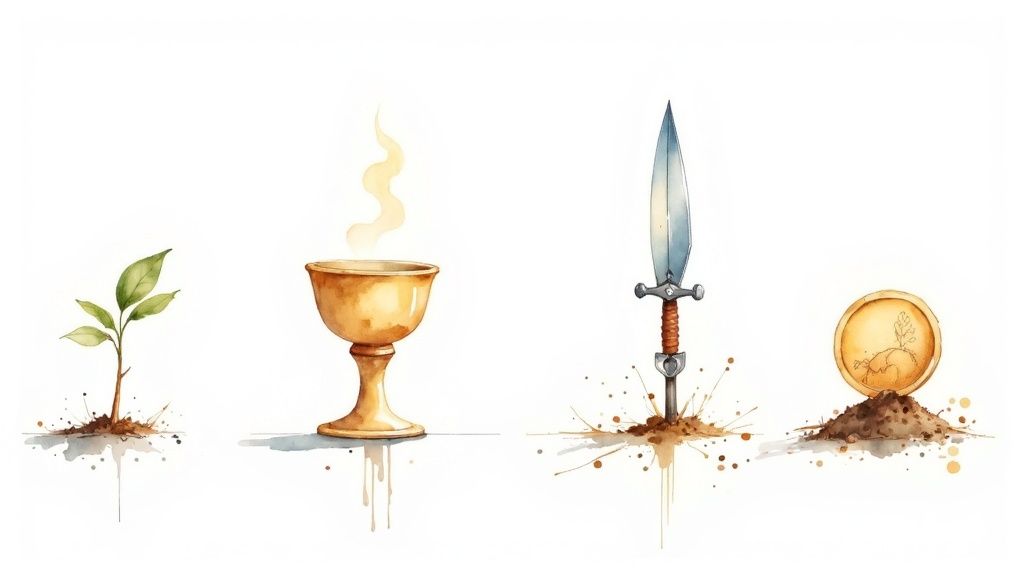
Each of the four suits is tied to a classical element and governs a different area of our human experience. It’s like having four different lenses to look at any situation you might be facing.
The Four Suits and Their Meanings
Before we jump into the individual card meanings, we need to get a feel for the core energy of each suit. Understanding these themes is like learning the basic grammar of tarot. Once you have it down, you can start forming sentences and telling stories with the cards, which makes interpreting any Minor Arcana card far more intuitive.
Here’s a quick reference table to give you a solid framework for the 56 cards we’re about to explore.
The Four Suits of the Minor Arcana at a Glance
| Suit | Element | Governs | Keywords |
|---|---|---|---|
| Wands | Fire | Passion, creativity, ambition, action, willpower | Energy, growth, inspiration, determination, projects |
| Cups | Water | Emotions, relationships, intuition, feelings, connection | Love, joy, harmony, creativity, inner world |
| Swords | Air | Thoughts, communication, challenges, intellect, truth | Clarity, conflict, decisions, mental state, beliefs |
| Pentacles | Earth | Material world, finances, career, home, health | Abundance, stability, security, work, manifestation |
Think of this table as your cheat sheet. Now, let’s explore each of these energetic realms in a bit more detail, starting with the fiery spark of the Wands.
The Suit of Wands: Igniting Your Passion
The Suit of Wands is all about the element of Fire. It represents that inner spark—your passion, creativity, ambition, and raw willpower. These cards speak to your drive, your energy, and the actions you take to make things happen.
When Wands cards show up in a reading, they’re often pointing to new projects, career goals, or flashes of creative inspiration. They’re asking you to get in touch with what truly lights you up and to find the courage to go after it.
For instance, the Ace of Wands is like a lightning bolt of pure potential—a new idea or a sudden surge of energy. The Three of Wands, on the other hand, shows that initial spark evolving into a long-term vision, encouraging you to look to the horizon with confidence.
The Suit of Cups: Exploring Your Emotions
Governed by the element of Water, the Suit of Cups dives deep into the world of emotions, relationships, intuition, and creativity. These cards are all about the heart: how we feel, how we connect with others, and how we listen to that quiet inner voice.
A reading heavy with Cups cards suggests that feelings are at the very center of the situation. They can signal love, joy, and harmony, but they can also point to sadness or emotional blockages, depending on the specific card and where it falls in a spread.
The Cups suit reminds us that our feelings are a powerful source of guidance. Just as water flows, these cards encourage us to allow our emotions to move freely, teaching us lessons in compassion, connection, and vulnerability.
Take the Two of Cups, a classic card for a beautiful, balanced partnership and mutual affection. Contrast that with the Five of Cups, which speaks to loss and regret, focusing on what’s been spilled while ignoring the love that still remains. This suit gives us a complete vocabulary for the human heart.
The Suit of Swords: Navigating Your Thoughts
The Suit of Swords is tied to the element of Air, which is the realm of our thoughts, intellect, communication, and challenges. This suit has a reputation for being difficult because it doesn’t shy away from conflict, tough decisions, or hard truths. But its ultimate goal is always clarity.
Swords cards push you to examine your beliefs, your mindset, and the way you communicate. They represent the mental battles we all face, from the anxiety of the Nine of Swords to the profound “aha!” moment of the Ace of Swords.
This suit teaches us that while our thoughts can feel like a battlefield, they can also be our greatest tool for setting ourselves free. The Eight of Swords, for example, perfectly illustrates the feeling of being trapped by your own thoughts, revealing that the limitations we perceive are often self-imposed.
The Suit of Pentacles: Grounding Your Reality
Finally, we have the Suit of Pentacles, connected to the element of Earth. It governs the tangible, material aspects of life: your career, finances, home, physical body, and your connection to the physical world. These cards are all about bringing your energy down to earth and into practical reality.
When Pentacles appear, they draw your attention to the real-world results of your efforts. They can signal financial security, career stability, or the simple joys of a comfortable life. The Ten of Pentacles, for example, is the epitome of long-term wealth, family legacy, and lasting security.
But this suit also carries a warning against becoming overly attached to the material world. A reversed Four of Pentacles might point to a scarcity mindset or a fear of losing what you have, reminding you that true abundance is about more than just what’s in your bank account.
Understanding the Court Cards
Within each of the four suits, you’ll find four Court Cards: the Page, Knight, Queen, and King. For many beginners, these 16 cards can be the trickiest to get the hang of. That’s because they’re flexible and can represent a few different things:
- A person in your life: A literal individual who embodies the card’s energy.
- An aspect of your personality: A part of yourself you need to develop or connect with.
- A situation or event: The energy of the card manifesting as a situation you’re in.
To make them easier to grasp, think of them as a royal family, each member with a different level of maturity and mastery over their suit’s element.
- Pages (The Spark): Pages are the students, messengers, and curious explorers. They bring news of new opportunities and the excitement of starting something fresh. The Page of Cups, for example, could be a message of love or an invitation to explore your creative side.
- Knights (The Action): Knights are all about action, movement, and commitment. They are more focused and driven than the Pages, often with an “all-or-nothing” energy. The Knight of Wands is the classic daredevil, charging forward with passion, sometimes without looking before he leaps.
- Queens (The Mastery Within): Queens represent the internal mastery of their suit’s energy. They are nurturing, receptive, and emotionally intelligent rulers. The Queen of Pentacles is a master of her home and resources, creating a secure and abundant environment through practical care.
- Kings (The Mastery Without): Kings represent the external mastery and leadership of their suit. They are confident, authoritative, and in command of their domain. The King of Swords is a master of intellect and truth, making clear, unbiased decisions based on logic and integrity.
By understanding the core themes of the four suits and the personalities of the Court Cards, you now have a solid foundation for interpreting all 56 Minor Arcana cards. This framework allows you to see them not as separate definitions to memorize, but as parts of a beautiful, cohesive system that reflects the complexity of our everyday lives.
Weaving The Cards Into A Cohesive Story
Getting to know the meaning of each card is a huge first step. But the real magic of tarot reading happens when you start to connect those individual meanings and see how they form a single, cohesive story.
Think of it like learning the alphabet. It’s one thing to know your A, B, and Cs (the cards), but the real power comes when you string them together into words, sentences, and paragraphs to tell a story. A tarot spread isn’t just a random collection of messages; it’s a conversation where every card plays off the ones around it.
This is the moment when your reading practice shifts from memorization to genuine intuition. The cards stop being separate voices and start singing in a chorus, offering a much richer and more layered look at your situation.
From Keywords To Connections
The secret is to look beyond a simple list of keywords and start noticing the threads that tie the cards together. How does the vibe of the first card flow into the second? Does a tough-looking card change the meaning of a happy one next to it?
A fantastic way to start practicing this is with a simple Past-Present-Future spread. This classic three-card layout gives you a natural narrative flow, making it easier to spot the cause-and-effect relationships between the cards.
- Past: This card points to the background of the situation—the events or energies that got you here.
- Present: This one is a snapshot of right now. It highlights the main issue or theme you’re dealing with.
- Future: This card shows where things are likely headed if you stay on the current path. It’s not set in stone, but a potential outcome.
This view of tarot as a narrative tool isn’t new. Back in 1933, the famous psychiatrist Carl Jung gave tarot a nod by connecting its power to “psychological images,” or what we call archetypes. His work helped shift tarot from a fortune-telling game to a respected tool for self-reflection. You can read more about tarot’s psychological depth over at Smithsonian Magazine.
Demystifying Reversed Cards
Don’t panic when a card shows up upside down! Reversed cards tend to stress beginners out, but they rarely mean “doom and gloom.” Think of a reversal as the deck nudging you to look a little closer.
A reversed card usually means the card’s energy is:
- Blocked or Delayed: The positive aspects of the card are there, but something is getting in the way.
- Internalized: The energy is focused inward. You might be thinking about it or feeling it privately instead of acting on it.
- In Need of Attention: It’s a spotlight on an area of your life that could use a little extra thought or a new approach.
For instance, getting The Sun reversed doesn’t mean your life is suddenly devoid of joy. It’s more likely a gentle hint that something is temporarily casting a shadow, making it hard for you to see the happiness and clarity that’s already there.
By learning to weave the cards together and read reversals with this kind of nuance, you’re not just reading tarot—you’re building a powerful practice for deeper insight.
Got Questions? Let’s Talk Tarot
As you start exploring the world of tarot, you’re bound to have questions. Everyone does! Learning to read the cards is a personal journey, but a lot of us stumble over the same things in the beginning. Let’s clear up some of those common hurdles right now so you can feel more confident and let your intuition lead the way.
Think of this as a chat with a friend who’s been reading cards for a while. I’ll give you straight, practical answers to the questions that come up most often, from whether you need to memorize everything to reading for yourself.
Do I Really Have to Memorize All 78 Card Meanings?
Absolutely not. In fact, please don’t! Trying to cram 78 meanings into your brain with flashcards is a surefire way to get frustrated and quit. A much better approach is to understand the systems that hold the deck together: the journey of the Major Arcana, the energy of the four suits, and the story that unfolds from the Ace to the Ten.
It’s a lot like learning a language. You don’t just memorize a dictionary from A to Z. You learn the basic grammar and sentence structure, and then you start building your vocabulary by using it. The card meanings will stick as you build a real, personal relationship with them.
Are the Meanings the Same in Every Deck?
For the most part, yes. The vast majority of modern tarot decks are based on the classic Rider-Waite-Smith (RWS) system, so the core meanings are pretty consistent. The artwork might change, but the fundamental message of a card like the Three of Wands—looking ahead, planning, expansion—will be the same.
Just be aware that a few other systems exist, like the Thoth or Marseille tarot, which have their own distinct traditions. If you’re just starting out, sticking with an RWS-based deck will make your life much easier, since nearly all the books and online guides you’ll find use that structure.
Do Reversed Cards Always Mean Something Bad?
Not at all! This is a huge misconception. A reversed card isn’t a sign of doom and gloom. It usually just points to energy that’s a bit stuck, blocked, delayed, or turned inward. It’s simply asking for a closer look.
For instance, getting the Strength card in reverse doesn’t mean you’re weak. It’s more of a nudge to look inside for your courage. It suggests your power is there, but maybe you’re not expressing it outwardly right now. Think of a reversal as a gentle tap on the shoulder, saying, “Hey, pay attention to this.”
Is It Okay to Read Tarot for Myself?
Yes, a thousand times yes! Reading for yourself is one of the most powerful ways to use the tarot. It’s an incredible tool for self-reflection, personal growth, and getting in touch with your own intuition.
The only trick is to be as honest and objective with yourself as you would be with a friend. It’s also fantastic practice for seeing how cards interact and for deepening that personal connection you have with your deck.