
When you’re just starting out, the best tarot decks are almost always based on the classic Rider-Waite-Smith deck. There’s a good reason for this—its straightforward, illustrative symbols have become the bedrock of modern tarot learning. Decks like the popular Light Seer’s Tarot or the Modern Witch Tarot are fantastic choices for newcomers because they take that foundational imagery and give it a fresh, relatable spin.
What Makes a Tarot Deck Good for Beginners?
Walking into the world of tarot is a thrill, but seeing the thousands of decks out there can feel like a lot. How do you find the one that will make learning feel natural and exciting, not like a chore? The secret isn’t about finding a single “perfect” deck. It’s about finding one with the right features to help you build confidence as a reader.
Think of choosing your first deck like picking a partner for a new project. You want someone who communicates clearly, supports you, and makes the whole process enjoyable. For tarot, that means starting with a deck that speaks a clear, visual language.
A Solid Foundation in Symbolism
By far, the most important thing for a beginner’s deck is that it’s based on the Rider-Waite-Smith (RWS) system. Before this deck came along in the early 1900s, most tarot decks only had illustrations on the Major Arcana cards. The Minor Arcana were often just simple “pip” cards, like a regular deck of playing cards.
The RWS deck changed everything by putting a fully illustrated scene on every single one of the 78 cards. This was a game-changer. Suddenly, you didn’t have to memorize abstract definitions. The pictures told a story, making it so much easier to connect with the card’s meaning intuitively.
A great beginner deck doesn’t expect you to be a history scholar or a psychic. It uses its art to tell a story, inviting your own intuition to step in and connect the dots.
This accessible, visual approach is a huge reason why tarot has become so popular. The global tarot card market was valued at around USD 1.29 billion in 2023 and is expected to keep growing. This boom is fantastic for newcomers because it means there are more diverse and high-quality options available than ever before. You can learn more about these market trends and how they connect to the broader wellness movement.
More Than Just Pictures: Guidebooks, Art, and Feel
A helpful guidebook is your other best friend when you’re starting out. A good one does more than just throw a few keywords at you. It will explain the symbolism on the card, give you some context for its meaning, and maybe even offer a few questions to help you reflect. It’s your first teacher, guiding you as you learn the language of the cards.
Finally, don’t forget about the practical side of things.
- Art Style: Do the images resonate with you? You’ll be spending a lot of time with this deck, so pick one with art you genuinely love looking at.
- Card Quality: Look for decent cardstock that feels good in your hands and will hold up to lots of shuffling. Flimsy cards can be a real pain to handle.
- Card Size: Standard tarot cards can be a bit large, especially if you have smaller hands. If that feels awkward, look for “pocket” or “tin” editions of popular decks, which are smaller and easier to manage.
When all these elements come together, they create a learning experience that feels supportive and personal, laying the perfect groundwork for your entire journey with tarot.
Before we go further, here’s a quick summary of what to look for in your first deck.
Key Features of a Beginner-Friendly Tarot Deck
This table breaks down the most important characteristics to look for when choosing your first tarot deck, helping you make a confident and informed decision.
| Feature | Why It Matters for Beginners | What to Look For |
|---|---|---|
| RWS-Based System | The illustrated scenes on all 78 cards provide clear visual cues, making it much easier to learn and interpret meanings intuitively. | Look for decks described as “Rider-Waite-Smith style,” “RWS-based,” or that show fully illustrated Minor Arcana cards. |
| Comprehensive Guidebook | A good guidebook acts as your first teacher, explaining symbolism, offering keywords, and providing context for each card’s meaning. | Check reviews for comments on the guidebook’s quality. Look for more than just keywords—seek out explanations and reflective prompts. |
| Resonant Art Style | You’ll connect more deeply and be more motivated to practice with a deck whose artwork you find beautiful and meaningful. | Browse images of the cards online. Does the art speak to you? Do the characters and scenes feel relatable? |
| Good Cardstock Quality | Sturdy, flexible cards are easier to shuffle and will withstand regular use, making your reading experience more enjoyable. | Search for reviews that mention “cardstock quality,” “shufflability,” or “durability.” Matte finishes are often easier to handle. |
| Comfortable Card Size | If the cards are too big or small for your hands, shuffling can feel awkward and frustrating. | Standard tarot cards are about 2.75″ x 4.75″. If you have smaller hands, consider “pocket” or “tin” versions. |
Thinking about these key features will help you move past the overwhelming number of choices and zero in on a deck that will truly support your learning.
The Top 5 Tarot Decks For Beginners
Now that you know what to look for in a great beginner deck, let’s dive into some of the most trusted and beloved options out there. This isn’t just a random list; it’s a curated path that starts with the absolute classic and winds through some beautiful modern takes. Each one of these decks is built on a solid, reliable foundation, meaning you can start with them and grow with them for years to come.
This mind map really pulls together all the key ideas we’ve been talking about.
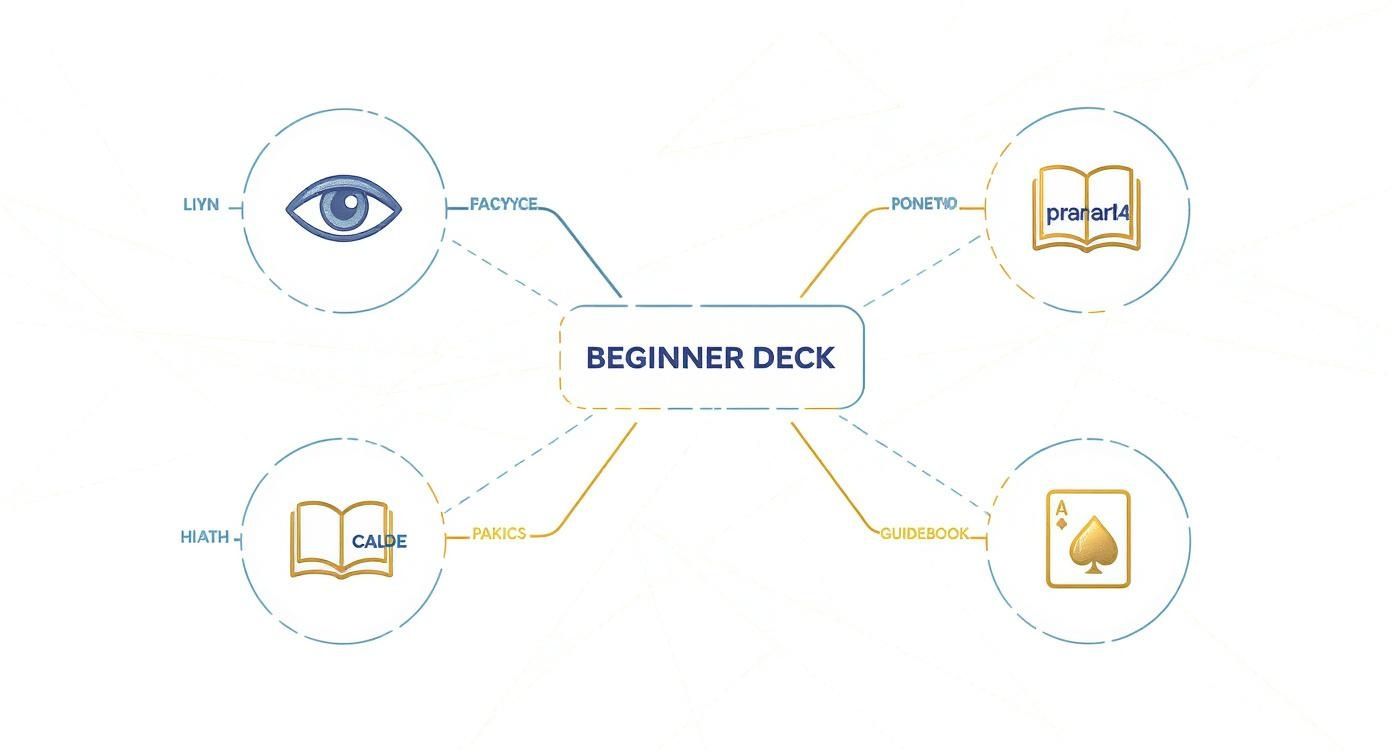
As you can see, it’s the combination of clear symbols, a solid guidebook, and good card quality that really makes for a smooth learning curve. Let’s see how our top picks stack up.
The Rider-Waite-Smith Deck
Let’s start with the OG, the gold standard: the Rider-Waite-Smith (RWS) deck. First published back in 1909, this is the deck that pretty much every modern tarot book, course, and reader uses as a baseline. It was a true collaboration between scholar Arthur Edward Waite and the brilliant artist Pamela Colman Smith, whose iconic illustrations have defined tarot for over a century.
Its magic is in its clarity. Unlike older decks where the numbered cards were just pips (like playing cards), every single one of the 78 RWS cards tells a story with a full scene. This makes it incredibly straightforward for a beginner to look at a card and intuitively grasp its meaning. If you want the strongest possible foundation, this is it.
The Modern Witch Tarot
What if you love the classic RWS system but want something that feels more… now? Enter the Modern Witch Tarot. Lisa Sterle’s masterpiece takes the original scenes and completely reimagines them with diverse, stylish, and relatable people in a 21st-century world. Think skateboards, laptops, and selfies.
This isn’t just a cosmetic update; it makes the meanings click instantly. Seeing timeless archetypes in familiar situations makes the cards feel so much more accessible and personal. It’s an empowering, inclusive, and visually gorgeous deck for anyone who wants their practice to feel vibrant and current.
Choosing a deck is less about finding the “right” one and more about finding the one that speaks your language. The art should spark your curiosity and invite you to look closer.
This becomes especially true as you venture into decks with more unique artistic voices, even if they’re still rooted in the same tradition.
The Light Seer’s Tarot
The Light Seer’s Tarot has become one of the most popular indie decks of the last few years, and once you see it, you’ll understand why. It follows the RWS structure but drenches it in a soulful, bohemian, and deeply intuitive energy. The art is vibrant and emotionally charged, focusing on the real human experiences behind each card’s theme.
What makes it so beginner-friendly is its emotional connection. The images are designed to make you feel something, making it a perfect companion for journaling and self-exploration. Plus, the guidebook is famous for its insightful, empowering messages that gently guide you to see both the “light” and “shadow” sides of every card.
Everyday Witch Tarot
If some tarot decks feel a bit too serious and mystical for your taste, you’ll adore the Everyday Witch Tarot. It’s just so charming and playful! The artwork shows modern witches going about their lives, often with a wink and a smile. You’ll see a witch wobbling on her broomstick to represent the Two of Pentacles or gleefully riding a vacuum cleaner for The Chariot.
But don’t let the lighthearted vibe fool you—this deck is surprisingly deep and incredibly easy to read. The familiar, everyday scenes make the symbolism feel natural and intuitive. It’s a fantastic choice for anyone who wants to approach tarot with a sense of fun and joy.
The Tarot of the Divine
Finally, for the storytellers, there’s the Tarot of the Divine. This unique deck connects tarot archetypes to a rich collection of folklore, myths, and fairy tales from all over the world. Each card is a beautiful illustration from a specific story, like The Little Mermaid embodying The Fool or the Japanese legend of Urashima Tarō representing The Star.
This deck is a dream for beginners who learn through narrative. Instead of just memorizing keywords, you connect each card to a powerful story. The guidebook is essential here, as it explains the tale behind each illustration, adding incredible depth and magic to your readings.
Beginner Tarot Deck Comparison
To help you see how these decks stack up at a glance, here’s a quick comparison of their key features. Think about what matters most to you—the art, the symbolism, or the kind of readings you want to do.
| Deck Name | Art Style | Symbolism Base | Best For… | Guidebook Quality |
|---|---|---|---|---|
| Rider-Waite-Smith | Classic, iconic, detailed | The original RWS | Building a traditional foundation | Standard but essential |
| Modern Witch Tarot | Contemporary, diverse, stylish | Modern take on RWS | Readers wanting a relatable, current feel | Excellent and empowering |
| The Light Seer’s Tarot | Bohemian, emotional, intuitive | Soulful interpretation of RWS | Self-reflection and emotional work | Deeply insightful and praised |
| Everyday Witch Tarot | Whimsical, charming, playful | Lighthearted take on RWS | A fun, non-intimidating approach | Clear and helpful |
| Tarot of the Divine | Global, story-based, elegant | RWS through world folklore | Storytellers and myth lovers | Comprehensive and essential |
Ultimately, any of these five decks will give you a fantastic start. The best one is simply the one that excites you the most and makes you eager to pull a card.
How to Choose a Deck That Connects with You
While recommendations are a fantastic starting point, the final step in picking the best tarot cards for beginners is all you. This part is less about following a rulebook and more about tuning into your own gut feelings. This deck will be your partner in self-discovery, so the connection you feel is what matters most.
Think of it like choosing art for your home. You don’t just grab something because it’s popular; you find a piece that makes you feel something. It draws you in and gets your imagination going. A tarot deck is the same. The images should hit you on an intuitive level.
Let the Art Guide Your Intuition
A deck’s visual language is how it’s going to communicate with you. When you find yourself drawn to a certain art style—maybe it’s minimalist, maybe it’s whimsical, or maybe it’s super traditional—you’re already building a bridge to understanding its messages. A strong aesthetic connection makes learning feel less like a chore and more like a conversation.
As you browse decks, whether online or in a shop, notice what catches your eye. Do the colors make you feel a certain way? Do the figures on the cards feel like people you could get to know? That initial spark is your intuition whispering that you and this deck might just speak the same language.
Your first deck should feel like an invitation, not a textbook. The right one will make you excited to shuffle the cards and discover the stories waiting inside.
This excitement is the secret ingredient for building a consistent practice. If you love just looking at your cards, you’ll be way more motivated to actually use them.
Practical Steps for Finding Your Match
Beyond that initial gut-pull, a little bit of practical research can seal the deal. This is how you make sure your choice is both intuitive and smart, setting you up for success from day one.
Here are a few steps to take before you commit:
- Look for Flip-Throughs: Search for video reviews or “flip-throughs” of the deck on YouTube. Seeing all 78 cards gives you a much better feel for the deck’s overall vibe and artistic consistency than the box art ever could.
- Read Diverse User Reviews: Don’t just look at the five-star ratings. Dig into reviews that talk about things like cardstock quality, how helpful the guidebook is, and whether the cards are easy to shuffle. These everyday details can make or break your experience.
- Research the Creator: Sometimes, learning a bit about the artist or author adds a whole new layer of connection. Understanding their vision or the story behind the deck’s creation can deepen your appreciation for its unique voice.
Ultimately, choosing your deck is your first real exercise in trusting your intuition. Let your curiosity lead the way, and you’ll find a deck that feels less like a tool and more like a trusted friend for the journey ahead.
How to Bond with Your New Tarot Deck

Once you’ve finally found the deck that feels right, the real journey begins. Now it’s time to turn that beautiful stack of cards into a trusted partner for your readings. Bonding with your new tarot deck is a deeply personal process, and it’s the key to unlocking clear, intuitive insights. Don’t worry, this isn’t about complicated rituals—it’s about building familiarity and respect.
Think of it like getting to know a new friend. You spend time together, you listen to what they have to say, and you learn their unique way of communicating. Your tarot deck is the same. The more you simply handle and engage with the cards, the more they’ll start to feel like an extension of your own intuition.
Initial Cleansing and Connection
Before you even pull your first card, many readers like to cleanse their new deck. The idea is to clear out any leftover energy from its creation, shipping, or from anyone who might have handled it before you. This little ritual resets the cards, making them a blank slate ready to sync up with your personal energy.
There are plenty of simple ways to do this, and no single way is “correct”:
- Knocking: Give the stacked deck a firm knock three times. It’s a simple, physical way to “shake off” any old vibes.
- Smoke Cleansing: Carefully pass the cards through the smoke from incense, palo santo, or sage.
- Sleeping with Them: Tuck your new deck under your pillow for a few nights. This helps you connect with its energy on a subconscious level while you sleep.
Just pick the method that feels good to you. It’s the intention behind the action that matters most—you’re creating a moment of purpose to welcome the deck into your life.
Your deck isn’t just 78 pieces of paper; it’s a tool for introspection with its own unique voice. Taking time to bond with it shows respect for that voice and helps you hear its messages more clearly.
After cleansing, the real conversation can begin. One of the best ways I’ve found to get acquainted with a deck’s personality is to do a “deck interview” spread. It’s a straightforward practice that helps you understand how your new deck likes to communicate and what its personality is like.
Getting to Know Your Deck
A deck interview is exactly what it sounds like: you ask your cards questions about themselves. It’s a fantastic first exercise for building a solid connection. Just shuffle your cards while thinking about each question, then draw a card as the answer.
Here’s a classic interview spread to get you started:
- What is your most important characteristic? (This reveals the deck’s core personality.)
- What are your strengths as a deck? (Shows you where it will shine the brightest.)
- What are your limitations? (Helps you understand what it’s not designed for.)
- What can I learn from you? (This sets the stage for your journey together.)
- What is the best way to work with you? (Offers practical advice for your reading style.)
Make sure you write down the answers in a journal! This first dialogue is like the opening chapter in a long, insightful story you’ll share with your deck, helping you understand its unique energy from day one.
How to Do Your First Tarot Reading
Alright, you’ve cleansed your deck and spent some time getting to know it. Now for the exciting part: your very first reading. Don’t let this feel intimidating. The goal here isn’t to perfectly predict the future, but to start a conversation with your intuition and gain a new perspective on whatever is on your mind.
Think of it as a little ritual. Find a quiet corner where you can have a few minutes to yourself. Settle in, take a few deep breaths, and just hold the deck in your hands. This simple act helps cut through the mental chatter, making it easier to hear what the cards have to say.
Framing Your Question
The secret to a great reading often lies in asking a great question. If you ask a vague or simple yes/no question, you’re likely to get a confusing answer in return. The best questions are open-ended and focused on what you can learn or do.
For example, instead of asking, “Will I get the job?” try shifting your perspective to something like, “What can I do to present my best self in the interview?” See the difference? The first question asks for a prediction, while the second asks for guidance, putting the power right back in your hands.
Here are a few more examples of strong beginner questions:
- What energy should I be focusing on this week?
- What do I most need to understand about this situation?
- What’s the main obstacle I’m facing right now?
- How can I best support myself through this challenge?
Shuffling and Drawing Your Cards
With your question held gently in your mind, start shuffling the cards. Honestly, there’s no “right” way to do this. You can do a simple overhand shuffle, a fancy riffle shuffle, or just spread them out and mix them up. The idea is to pour your energy and intention into the deck.
When should you stop? Whenever it feels right. Seriously, just trust your gut. Once you stop, you can cut the deck into a few piles and put it back together, or just draw cards straight from the top.
Your intuition is your most valuable guide during a reading. The images on the cards are designed to spark your own insights. Use the guidebook as a reference, not a rigid set of rules.
This personal, intuitive approach is a huge reason tarot has become so popular. It’s fascinating to see how spiritual interests show up in digital trends and even buying habits. In fact, tarot cards became one of the top five most searched terms on Kickstarter in 2024, which points to a huge demand for unique, beginner-friendly decks in online spaces. It shows how many of us are using these tools for wellness and self-discovery. If you’re curious, you can discover more insights about the tarot cards market online.
Interpreting a Three-Card Spread
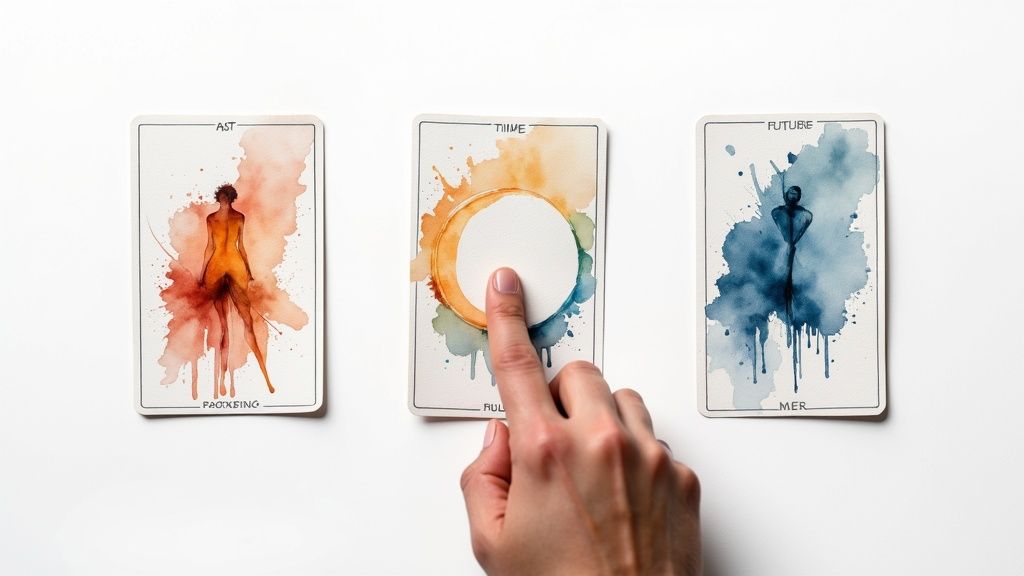
A three-card spread is the perfect place to start. It’s simple, surprisingly powerful, and gives you a clear little story to work with. The classic version is the Past-Present-Future spread.
- Card 1 (Past): Lay this card on your left. This card points to the background of your question—the past events or foundational energies that brought you here.
- Card 2 (Present): Place this one in the middle. This is the heart of the reading. It reflects where you are right now in relation to your question.
- Card 3 (Future): Put this card on the right. This suggests the potential outcome or where things are heading if you stay on your current path.
Now, just look at the three cards together. Before you even touch your guidebook, what story do you see? Notice the imagery, the colors, the feelings they bring up in you. That’s it. That’s you, reading tarot.
Common Questions New Tarot Readers Ask
As you start exploring the world of tarot, you’re bound to have questions. That’s completely normal! Feeling a bit of uncertainty is just part of the process, but getting some clear answers can really help build your confidence. Let’s tackle some of the most common things people wonder about when they first pick up a deck.
The idea here is to clear up any confusion so you can get on with what really matters: building a real, personal connection with your cards. Think of this as a friendly chat to help you get over those first-time jitters.
What’s the Best Tarot Deck for a Total Newbie?
This is the big one, isn’t it? While the “best” deck is always going to be the one that speaks to you, the Rider-Waite-Smith (RWS) deck is the classic for a reason. Its symbolism is the bedrock of modern tarot, which means almost every book, course, or blog post you find will be using it as the standard.
What makes it so good for learning is that every single card has a full picture on it—a scene you can look at and interpret. This makes it so much easier to get an intuitive feel for the meanings, rather than just trying to memorize a bunch of keywords. Starting with an RWS-based deck gives you a solid foundation you can build on for years to come.
Do I Have to Be Psychic to Read Tarot?
Absolutely not. Think of tarot less as a crystal ball and more as a deck of mirrors. It’s a tool for self-reflection and for tapping into your own intuition—that quiet inner voice you already have. The cards use symbols and universal stories to help you see a situation from a new perspective, uncovering insights you might have missed.
Some people definitely use tarot to complement their psychic gifts, but the core skill is really about pattern recognition and storytelling. It’s a practice anyone can learn and get better at with time.
Tarot isn’t about predicting a rigid, unchangeable future. It’s about exploring possibilities and empowering you to make the best choices for yourself right now.
When you look at it this way, tarot shifts from being some mystical, untouchable thing to a practical and powerful tool for personal growth.
Should I Get a Brand-New Deck or Is a Used One Okay?
This one is purely down to personal preference, and there’s no right or wrong answer. Some readers love the feeling of a brand-new, shrink-wrapped deck. It feels like a “blank slate,” ready to absorb only your energy as you begin your journey together.
On the other hand, plenty of people feel a used deck comes with its own history and wisdom baked in. If you find a pre-owned deck that calls to you, you might just want to give it a simple energy clearing—like knocking on it firmly or letting it sit with a piece of quartz—to make it your own. The only thing that really matters is that you feel a good connection to the cards, whether they’re fresh out of the box or have been on a journey before they found you.
How Long Does It Take to Learn How to Read Tarot?
Learning tarot is a lifelong adventure, but the good news is you can start doing real, helpful readings for yourself almost right away. You can easily start pulling a card a day or trying simple three-card spreads in your very first week.
Getting to a point where you feel you know all 78 cards inside and out might take a few months of steady practice. The secret is to simply enjoy the process. Focus on building a personal relationship with the images and stories in your deck, rather than cramming textbook definitions. Your understanding will naturally get deeper and richer with every single reading you do.